
Key Takeaways:
- Flat feet can change how weight is distributed across the body, influencing movement patterns in the legs, knees, and ankles.
- Misalignment caused by collapsed arches may place uneven stress on the knee and ankle joints, leading to discomfort or strain over time.
- Common signs include aching knees or ankles after standing or walking, pain around the kneecap, or discomfort spreading to the hips and lower back.
- Supportive footwear, orthotics, and strengthening exercises can help manage symptoms and reduce the risk of longer-term joint issues.
Introduction
Flat feet may seem like a minor foot condition; however, their impact often goes beyond the feet. When the arches of the foot collapse, they change the way the legs move and how the joints absorb everyday impact. Over time, these changes can place extra stress on the knees and ankles, sometimes leading to persistent discomfort. In Singapore, this is particularly relevant for people who are active or spend long hours on their feet.
Understanding the connection between flat feet, knee pain, and ankle strain helps explain why the issue develops, what signs to watch for, and the steps that can help reduce strain.
What Does It Mean to Have Flat Feet?
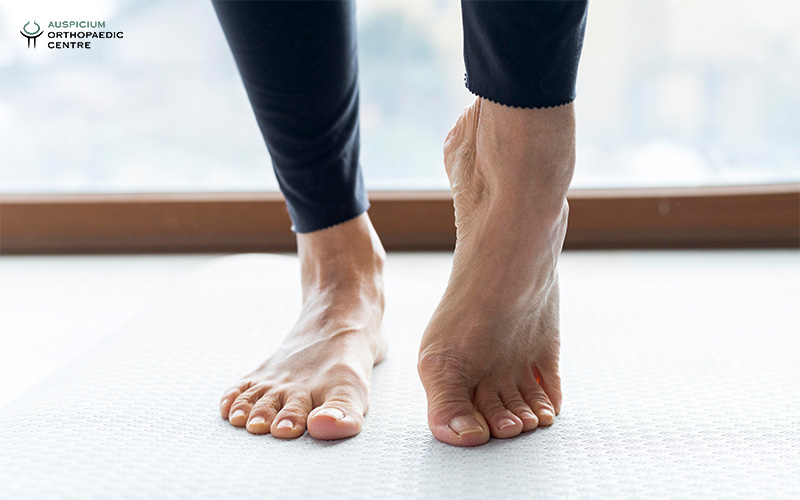
Flat feet, or fallen arches, occur when the inner arch of the foot is lower than usual or does not form fully. This results in more of the sole coming into contact with the ground during standing and walking. In some cases, the arch is flexible, visible when seated but flattening under weight, while in others it is rigid and consistently absent.
Not everyone with flat feet experiences difficulties, but changes in structure can affect how weight is distributed across the body. Without the natural lift of the arch, the feet may roll inward during movement. This alters how impact is absorbed and shifts forces upward through the ankles, knees, hips, and lower back. Over time, these changes may influence balance, posture, and movement patterns.
Recognising the link between flat feet and joint alignment helps explain why discomfort may appear beyond the feet. The knees and ankles may be exposed to uneven loading, which can lead to stiffness or strain over time. For individuals already experiencing pain related to flat feet, being aware of this chain of effects can help clarify how symptoms develop and where management strategies can help.
How Do Flat Feet Influence Knee Alignment?
Flat feet often lead to a movement pattern known as overpronation, where the ankle rolls inward with each step. This change in motion alters how the leg lines up from the foot to the hip. As the ankle turns inwards, the knee commonly follows, rotating slightly inward as well.
While subtle, these changes can impact how weight and pressure are distributed throughout the lower limbs. More force tends to pass through the inner side of the knee and ankle, creating uneven strain on the surrounding muscles and connective tissues. Over time, this can affect stability and may contribute to discomfort, particularly in individuals who walk, stand, or engage in repetitive-impact activities for extended periods.
How Can Misalignment Affect Knee and Ankle Function?
When foot posture changes, both the knees and ankles may be affected. Altered movement patterns can cause uneven loading and reduced joint efficiency. One common example is patellofemoral pain from flat feet, where the kneecap moves unevenly during activity, resulting in discomfort at the front of the knee.
At the ankle, overpronation can lead to strain on the inner ligaments and tendons, resulting in aching or a feeling of fatigue after walking or running. Over time, these repetitive stresses may lead to inflammation or wear on supporting structures.
High-impact activities such as running, jumping, or stair climbing tend to intensify these effects, as the joints must absorb greater forces with each step. If these issues remain unaddressed, the accumulation of strain can contribute to longer-term joint conditions that might require structured management, such as treatment for knee arthritis. For individuals already experiencing knee and ankle pain associated with flat feet, recognising these early signs allows for timely attention before symptoms worsen.
What Are the Signs That Flat Feet Are Affecting the Knees?
The effects of flat feet often develop gradually. Many people first notice a dull ache or heaviness in the knees or ankles after long periods of walking or standing. Some may experience discomfort around the kneecap, stiffness when rising from a seated position, or pain that travels to the hips or lower back.
Because these symptoms can resemble other musculoskeletal conditions, the role of flat feet is sometimes overlooked. Changes in foot posture and leg alignment can alter how forces travel through the lower limbs, explaining why discomfort may arise even without an apparent injury. Identifying the source of the problem often requires a closer look at how the feet, ankles, and knees work together during movement. In some cases, input from a knee specialist can help determine whether flat feet are contributing to these symptoms.
How Can Flat Feet and Related Knee Pain Be Managed?
Reducing the strain associated with flat feet often involves a combination of supportive measures and strengthening exercises. Approaches may include:
- Supportive footwear: Shoes with firm arch support and cushioning help spread weight more evenly across the foot during walking or running.
- Custom orthotics: Specially made inserts can help guide the foot into a more stable position, easing stress on the knees and ankles.
- Strengthening exercises: Building up the muscles in the feet, hips, and core improves stability and reduces the impact of overpronation on the knees.
- Stretching routines: Regular stretching exercises for the calves, hamstrings, and hip flexors can help ease muscle tension and support mobility.
- Activity adjustments: Alternating high-impact activities with lower-impact options, such as swimming or cycling, can help reduce stress on the joints.
These measures can help relieve discomfort while also lowering the risk of ongoing joint strain. For personalised advice, an assessment with an orthopaedic doctor in Singapore can help determine which approaches that are appropriate to your situation.
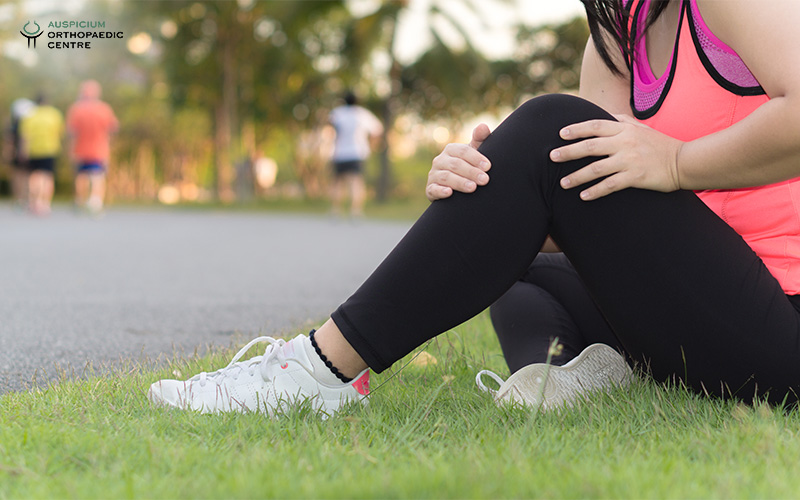
Flat feet can affect how both the knees and ankles function, gradually altering movement and joint loading over time. These changes can lead to persistent discomfort, especially for those who stand for long hours or engage in regular physical activity. If you are experiencing knee or ankle pain, flat feet may be a contributing factor.
Take a step towards clarity and comfort. Arrange a consultation with Auspicium Medical to have your symptoms evaluated and discuss practical options for managing your condition.